Inside the cup
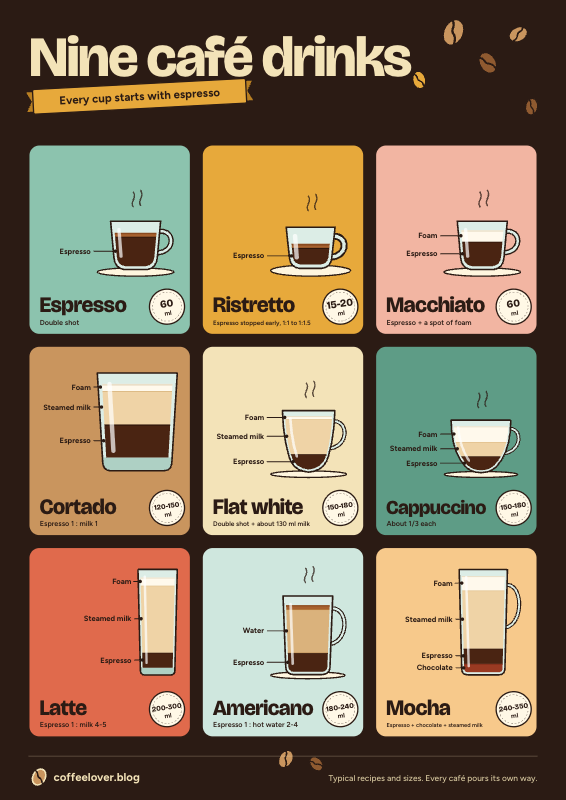
A flat white holds about 150 to 180 ml. Australian cafés use a cup of about 200 ml, New Zealand cafés one of about 175 ml. You drink it from a ceramic cup with a handle. In one survey of 2,365 Australians and New Zealanders, fans voted for ceramic and against glass. Most baristas pull a double shot and add more than twice as much milk as coffee.
The thin foam
The barista steams the milk with a little air, so it pours silky. On top sits a level layer of foam about 5 mm deep. A cappuccino carries 1 cm of foam or more. With less foam in the way, you taste more of the coffee. Baristas pour latte art with this silky milk too.
Flat white vs latte
A latte fills a 200 to 300 ml cup, with four to five parts milk to one part coffee. A flat white has about two and a half parts milk. Many baristas steam milk for both drinks the same way. One well-known Australian barista says the great majority there do. You get less milk in a flat white, so you taste more coffee.
Flat white vs cortado
A cortado holds about 120 ml. Baristas mix espresso and steamed milk in about equal parts and add little or no foam. Cafés serve it in a small glass. A flat white brings more milk and a thin layer of foam, in a ceramic cup. Order a cortado to stay closer to straight espresso. Order a flat white for a few more sips.
| Cortado | Flat white | Cappuccino | Latte | |
|---|---|---|---|---|
| Typical size | About 120 ml | About 150-180 ml | About 150-180 ml | About 200-300 ml |
| Espresso to milk | About 1 : 1 | About 1 : 2.6 | Roughly thirds | About 1 : 4-5 |
| Foam | Little or none | Thin, about 5 mm | 1 cm or more | About 0.5-1 cm |
| Served in | Small glass | Ceramic cup | Cup with a handle | Glass, sometimes a cup |
Australia or New Zealand
Australia and New Zealand both claim the flat white. Alan Preston put it on the menu at Moors Espresso Bar in Sydney in 1985. A 1983 review of another Sydney café mentions a flat white too. New Zealand tells stories instead: a café in Auckland, and a failed cappuccino in Wellington in 1989. A character in a 1963 English film orders one. No document so far proves who came first.