One shot
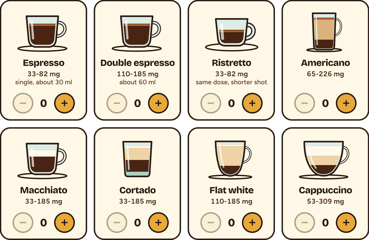
A single espresso comes from 7 to 9 g of coffee and fills about 30 ml. It carries about 63 mg of caffeine. Lab tests of café singles found anywhere from 33 to 82 mg. Your dose and your beans move that number. Robusta has 1.5 to 2 times the caffeine of arabica, so a blend with robusta in it carries more.
Ml for ml
An espresso yields about 2 g of drink for each gram of coffee. A pour over uses about 17 g of water per gram. Ml for ml, espresso holds about 2.1 mg of caffeine and drip about 0.4 mg. That makes a shot about five times as strong as the same amount of drip. Per ounce, you get about 63 mg from espresso and 12 mg from drip.
| Single espresso | Double espresso | Drip, 8 oz | Drip, 12 oz | |
|---|---|---|---|---|
| Size | 1 oz, 30 ml | 2 oz, 60 ml | 8 oz, 240 ml | 12 oz, 360 ml |
| Caffeine | About 63 mg | About 126 mg | About 96 mg | About 144 mg |
| Per oz | About 63 mg | About 63 mg | About 12 mg | About 12 mg |
A double
A double uses 14 to 18 g of coffee and fills about 60 ml. Twice the coffee gives you about 126 mg. Measured doubles run from about 110 to 185 mg. The EU food safety agency, EFSA, gives a lower figure: 80 mg for a 60 ml espresso. Most cafés outside Italy pour a double by default, so ask before you count.
Ristretto and lungo
A ristretto stops the shot early. A lungo lets it run long. The first drops come out strongest, and each later drop adds less caffeine. One lab pulled all three from the same 20 g of coffee. The ristretto held about 129 mg, the espresso 184 and the lungo 207. Shot length changed the caffeine more than grind or water temperature did.
Espresso or drip
An 8 oz mug of drip holds about 96 mg. A single shot at 63 mg has less, and a double at 126 has more. Water and milk add no caffeine, so an americano or a latte carries the caffeine of its shots. For healthy adults, the FDA gives a guideline of up to 400 mg a day. The caffeine calculator adds up your day, drink by drink.